
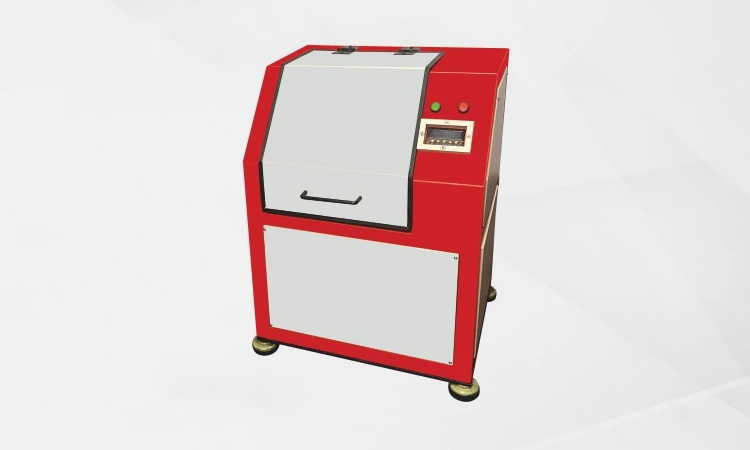
What is a Vibratory Cup Mill? Working Principle, Applications, and Benefits Explained
In modern laboratories and industrial environments, sample preparation is critical for ensuring accurate and reliable analytical results. One piece of equipment that plays a crucial role in pulverizing solid samples into fine powders is the Vibratory Cup Mill.
Used across various industries including cement, mining, metallurgy, and chemical laboratories, this compact yet powerful machine ensures uniform and efficient grinding of hard, brittle materials. In this blog, we’ll explore what a vibratory cup mill is, how it works, and why it’s indispensable in precision-driven environments.
What is a Vibratory Cup Mill?
A Vibratory Cup Mill is a high-performance grinding device used to pulverize solid samples into extremely fine powder for analytical and spectroscopic purposes. It uses the principle of intense vibrational energy to crush and grind hard materials such as minerals, ores, rocks, cement clinker, ceramics, and slag.
This machine is commonly used in XRF (X-ray fluorescence), XRD (X-ray diffraction), and ICP (Inductively Coupled Plasma) labs for sample preparation.
How Does a Vibratory Cup Mill Work?
The working principle of a vibratory cup mill is based on vibrational impact grinding:
1. Sample Placement
The solid sample is placed into a durable grinding cup, along with a grinding ring and puck (made of hardened steel, tungsten carbide, or other materials depending on the sample type).
2. High-Speed Vibration
The grinding set is clamped tightly inside the mill.
The motor generates intense, three-dimensional vibrations (rotational, oscillating, and horizontal motion) at high speed.
3. Impact and Friction
These vibrations cause the puck and ring to pulverize the sample by high-frequency impact and friction forces within the cup.
4. Fine Powder Formation
In just 1 to 2 minutes, the sample is ground to micron-level fineness, ideal for precise laboratory analysis.
Key Features of a Vibratory Cup Mill
- Rapid grinding time (usually under 2 minutes)
- Micron-level fineness (typically <75 microns or finer)
- No contamination with use of suitable grinding materials
- Compact and enclosed design for dust-free operation
- Programmable timer and safety interlocks
- Low noise and vibration levels for lab safety
Applications of Vibratory Cup Mills
Vibratory cup mills are widely used in industries that demand high precision in sample preparation:
- Cement Industry: Grinding clinker for quality control
- Mining & Geology: Pulverizing ore samples for mineral analysis
- Metallurgy: Preparing alloy and metal samples for spectroscopic testing
- Ceramics & Glass: Grinding raw materials for structural analysis
- Soil Testing Labs: Pulverizing soil for chemical and elemental analysis
- Environmental Testing: Grinding samples for trace element detection
Benefits of Using a Vibratory Cup Mill
- Consistent Results: Uniform particle size ensures reproducible analytical results.
- Speed & Efficiency: Achieves fine powder in a matter of seconds, saving time.
- Minimal Contamination: Grinding vessels made from appropriate materials reduce cross-contamination.
- Compact Design: Ideal for space-constrained laboratory environments.
- Low Maintenance: Simple mechanism with long-lasting components.
- Improved Safety: Sealed chamber minimizes dust and exposure risk.
Grinding Set Material Options
Different grinding set materials are available based on the sample type to avoid contamination and ensure durability:
- Tungsten Carbide: For hard and abrasive materials.
- Hardened Steel: Suitable for most minerals and ores.
- Zirconia or Agate: Ideal for non-metallic and low-contamination samples.
Maintenance Tips for Optimal Performance
- Clean grinding cups after every use to avoid cross-contamination.
- Regularly inspect the puck and ring for wear and replace when needed.
- Lubricate moving parts as per manufacturer guidelines.
- Ensure proper clamping of the grinding set before operation.
